

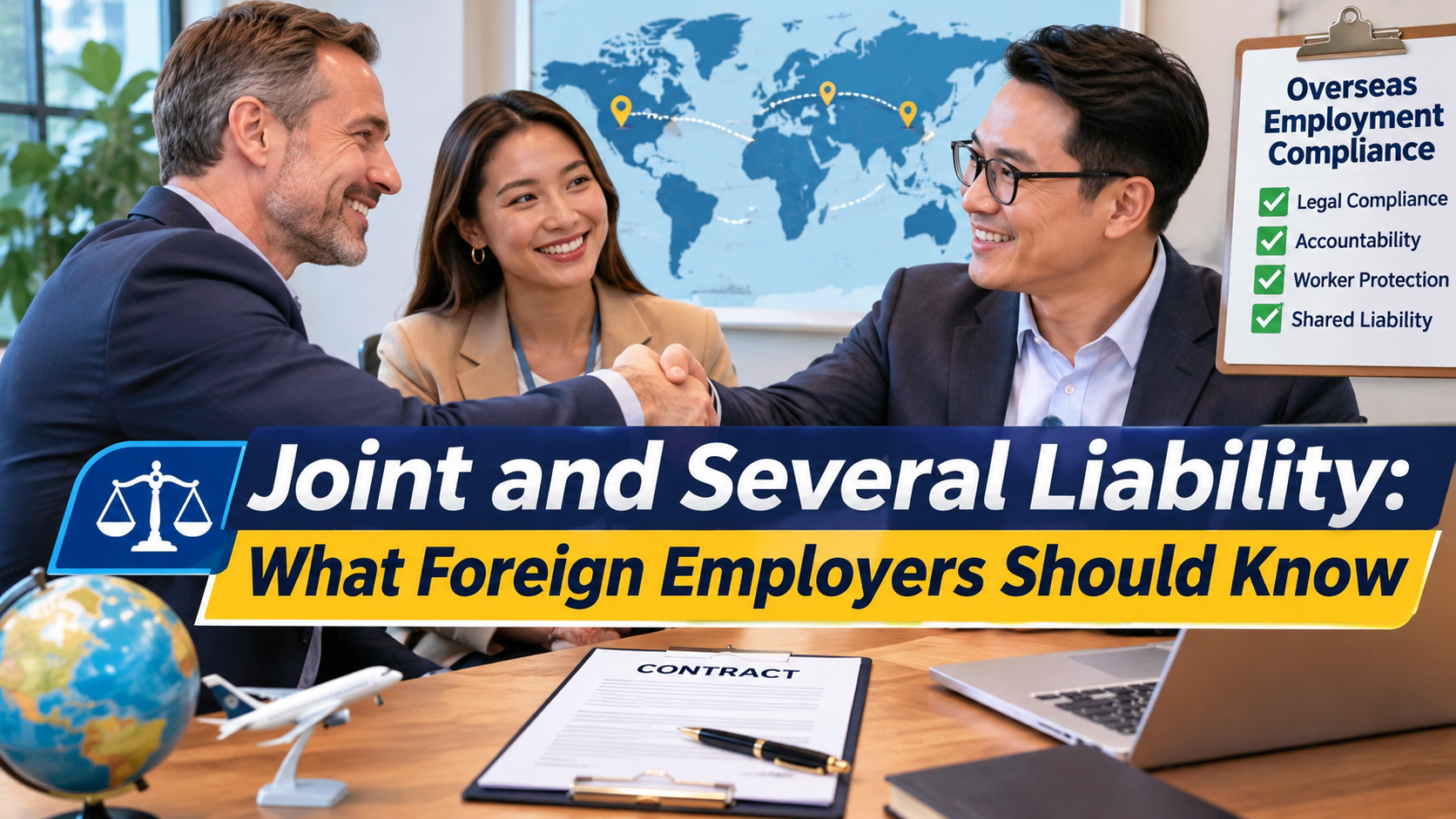
Filipino talent remains an important part of the global workforce. About 2.19 million Filipinos worked abroad in 2024, and nearly 98% had valid work contracts. For foreign companies hiring Filipino workers, however, recruitment involves more than finding qualified people and agreeing on compensation. Philippine law also sets clear responsibilities for overseas employers and their local recruitment partners.
One important rule is joint and several liability. It means that a foreign employer and its Philippine recruitment partner may both be held responsible for certain monetary claims filed by an overseas Filipino worker. Understanding this obligation can help your company avoid legal disputes, manage recruitment risks, and maintain responsible employment practices.
What the Law Says
Under Section 10 of Republic Act No. 8042, or the Migrant Workers and Overseas Filipinos Act, as amended, a foreign employer and its licensed Philippine recruitment or placement agency share responsibility for certain monetary claims made by overseas Filipino workers. This means a worker may pursue the full amount of a valid claim against either party or both, without having to seek payment from the foreign employer alone.
The overseas employment contract must explicitly state that the employer and recruitment agency share this legal responsibility. This provision is necessary for the contract to receive approval. The agency’s performance bond may also be used to satisfy monetary awards or damages granted to the worker. Depending on the circumstances, the agency’s directors, officers, or partners may also be held accountable under the law.
This arrangement helps protect Filipino workers when employment disputes arise across borders. It also means foreign employers should treat their relationship with a Philippine recruitment agency as an ongoing legal responsibility, not simply a transaction completed once a worker is deployed.
How Far the Risk Goes
The responsibility may extend beyond the initial employment period. In a December 2022 Supreme Court decision, the Court upheld a recruitment agency’s liability for a worker’s claims even after several contract renewals. The agency remained responsible because its recruitment relationship with the foreign employer continued throughout the worker’s employment. This shows why employers and agencies should properly document renewals and maintain clear communication about changes to employment arrangements.
Foreign government immunity may not automatically protect a local recruitment agency either. In ATCI Overseas Corporation v. Echin, the Supreme Court ruled that a private agency could still be held jointly and severally liable even though its foreign principal was a government entity claiming immunity from suit.
The financial consequences can also be significant. Under Section 10, when an overseas worker is dismissed without just, valid, or authorized cause, the law provides for reimbursement of the placement fee, with 12% annual interest, and salaries for the unexpired contract period—or three months for every year remaining, whichever is less. The law also addresses unauthorized salary deductions. These remedies depend on the circumstances and findings in the case.
How to Protect Your Business
Foreign employers can reduce legal and operational risks by working with a licensed Philippine recruitment agency that understands its responsibilities under local law. Before deployment, review the approved employment contract and confirm that compensation, job duties, working hours, benefits, and other conditions are clearly stated.
Keep accurate records of salary payments, employee concerns, contract changes, and performance matters. Do not make changes to employment terms without following the required procedures and coordinating with your recruitment partner. If a dispute arises, address it promptly and seek professional legal advice. The relevant Philippine legal framework also provides for mediation in resolving migrant worker concerns, making early communication an important part of dispute management.
A reliable overseas recruitment partner can help your company understand its obligations, maintain proper documentation, and support responsible hiring. Taking these steps from the beginning can help protect both your business and the Filipino workers who contribute to its success.
Partner with a Trusted Philippine Recruitment Agency
EDI-Staffbuilders International, Inc. brings over 45 years of overseas recruitment experience and a commitment to ethical, compliant hiring. Work with a trusted partner to recruit Filipino talent responsibly and protect your business. Visit our website and contact us to explore our services.
Note: This article provides general information, not legal advice. Foreign employers should consult qualified Philippine labor counsel about their specific recruitment arrangements and contracts.
